
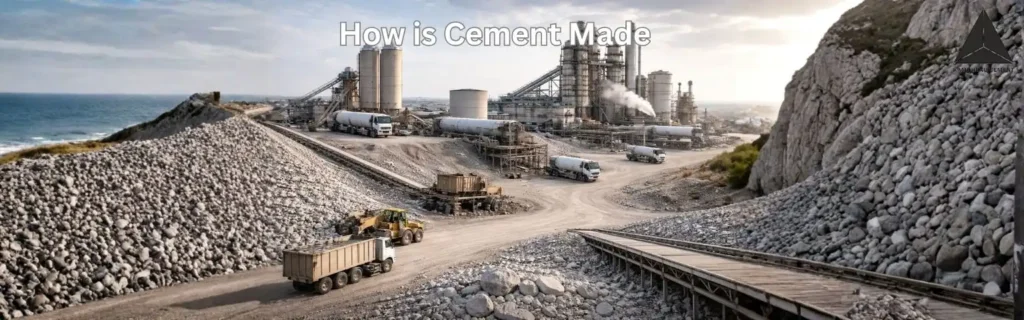
Ever walked past a construction site and wondered what’s actually inside those grey cement bags? Most people know cement holds buildings together, but ask them how is cement made and you’ll get blank stares.
Turns out, there’s way more engineering involved than you’d think. Those rocks sitting in quarries go through a pretty sophisticated journey before becoming the powder that builds your house. The cement manufacturing process isn’t just grinding up stones – it’s chemistry, precision, and serious heat.
Let’s walk through what actually happens from the quarry to the bags you see stacked at construction sites.
What exactly is Cement?
Before getting into how cement is made at a cement manufacturing plant, here’s what cement actually does.
Cement is what engineers call a hydraulic binder. That’s fancy talk for a powder that reacts with water to harden and stick things together. Mix it with water and it sets – even underwater, which is pretty cool when you think about marine construction or building during monsoons.
There are different types of cement for different jobs. OPC(Ordinary Portland Cement) is your fast-setting option for projects on tight timelines. PPC (Portland Pozzolana Cement) takes longer but holds up better long-term, especially in coastal areas where salt’s a problem.
Cement types aren’t just marketing gimmicks. High-rise buildings need different cement than what you’d use for a dam. That’s why the cement manufacturing process has to be so precise – changing the formula even slightly changes how the cement performs.
Raw Materials Needed to Make Cement
The cement manufacturing process starts with getting the right stuff from the ground. You can’t make quality cement from poor ingredients.
Limestone is the main player here – about 70-80% of what goes into cement. It’s basically calcium carbonate rock. Quarries near cement manufacturing plants dig up tons of this stuff daily.
Clay brings silicon, aluminum, and iron to the mix. Makes up maybe 10-15% of the recipe. Different clays create different cement characteristics, so manufacturers get picky about where they source it.
Iron Ore adds just 2-4% but matters for the chemical reactions happening later. Small amount, big impact.
Pet Coke or Coke Breeze isn’t really part of the cement itself – it’s fuel. These petroleum leftovers create the insane heat needed to cook everything together. Usually 8-10% by weight.
Gypsum gets mixed in at the very end, around 3-5%. Without gypsum, cement would harden so fast you couldn’t work with it. That stuff controls setting time.
Exact proportions change based on what you’re pulling from the ground and what cement types you’re making. Places like Kamdhenu test everything constantly, tweaking amounts to keep quality consistent.
The Step-by-Step Cement Manufacturing Process
So how is cement made actually? Here’s what happens inside a modern cement manufacturing plant.
Step 1: Mining and Crushing
Big excavators rip limestone and clay from quarries. That rock gets hauled to crushers that smash it into smaller chunks – usually 20-50mm pieces. First crushers handle the big stuff. Second round crushes it finer.
Step 2: Raw Material Grinding
Those crushed bits go into ball mills – giant rotating drums filled with steel balls. As it spins, the balls pulverize everything into powder. Grind it too coarse and the chemistry won’t work right later.
Step 3: Raw Mix Blending
Powders from different sources get mixed in exact amounts. Modern cement manufacturing plants use computers for this because precision matters. The blend sits in storage silos getting more uniform.
Step 4: Preheating
The powder mix enters tall preheater towers where hot exhaust from the kiln warms it to around 800°C. This saves energy by reusing heat that would otherwise just escape.
Step 5: Kiln Burning
Here’s where things get intense. The preheated powder goes into a massive rotating kiln – picture a huge tilted cylinder that spins slowly. Inside the burning zone? 1300-1500°C.
At those crazy temperatures, the raw materials chemically transform into cement clinker – small grey marble-sized pieces. The cement manufacturing process chemistry gets complicated here, but basically calcium bonds with silica and alumina creating the compounds that make cement work.
Step 6: Clinker Cooling
That glowing red clinker coming out needs to cool fast. Quick cooling affects quality and stops unwanted chemical stuff from happening. Air blasters drop the temperature from 1400°C to around 100°C in minutes.
Step 7: Clinker Storage
Cooled clinker sits in silos for at least a week. This “aging” lets things stabilize before final grinding. Rush this and your cement’s setting time gets unpredictable.
Step 8: Final Grinding
Aged clinker gets ground together with gypsum in more ball mills. How fine you grind it determines how fast the cement sets and gains strength. Different types of cement need different fineness, so grinding settings vary.
Step 9: Quality Testing
Before bagging anything, samples get tested for consistency, setting time, strength, chemical makeup. Batches that don’t pass strict standards don’t get sold.
Step 10: Packaging and Dispatch
Finally, finished cement fills those 50kg bags or loads into bulk trucks for big projects. Good manufacturers track every batch so if questions come up later, they know exactly what happened.
This whole cement manufacturing process takes weeks from blasting rock to bagging powder. Every step needs precision – cut corners anywhere and your cement won’t perform when buildings need it to.
Why the Cement Manufacturing Plant Location Matters?
Notice cement manufacturing plants aren’t randomly scattered around? There’s strategy behind where they get built.
Limestone Location is huge. When 70-80% of your raw material is limestone, hauling millions of tons across the country makes zero sense. Plants near limestone deposits save massive money and cut environmental impact.
Other Raw Materials need to be nearby too. While limestone’s the main ingredient, plants still need clay, iron ore, and gypsum. Regions where these all occur together become manufacturing sweet spots.
Roads and Railways determine whether you can actually get finished cement to customers economically. Plants near highways or rail lines distribute products way more efficiently. Kamdhenu’s plants across India aren’t randomly placed – they ensure quick delivery nationwide.
Power Supply is non-negotiable. The cement manufacturing process eats enormous energy, especially those kilns. Without reliable electricity or coal, forget running a plant.
Water Sources support cooling and production. Modern plants recycle water heavily, but initial setup and backup systems need water available.
Environmental Rules vary by region. Some places have stricter pollution controls making manufacturing costlier. Plants factor this into location decisions.
Market Access balances everything else. Being near limestone helps, but if you’re too far from where construction happens, distribution costs kill you. Smart manufacturers balance raw material access against customer proximity.
That’s why cement types availability differs by region. Local raw materials affect what grades plants can efficiently make.
What This All Means for Your Construction?
Understanding how is cement made shows why quality varies between brands. The cement manufacturing process has countless spots where shortcuts mess up performance.
From picking raw materials through running kilns to final grinding, every step affects whether cement does what it’s supposed to. Manufacturers like Kamdhenu running state-of-the-art cement manufacturing plants with serious quality controls deliver the consistency construction needs.
Different types of cement suit different jobs. Building a house versus a bridge versus a factory? They need different cement. Knowing how is cement made helps you appreciate why choosing quality cement matters for how long construction lasts.
Next time you pass a construction site, those grey bags will mean something different. You’ll know the journey from blasted quarry rock through crazy heat to precise powder – the sophisticated process building everything around you.