What is RMC Concrete?
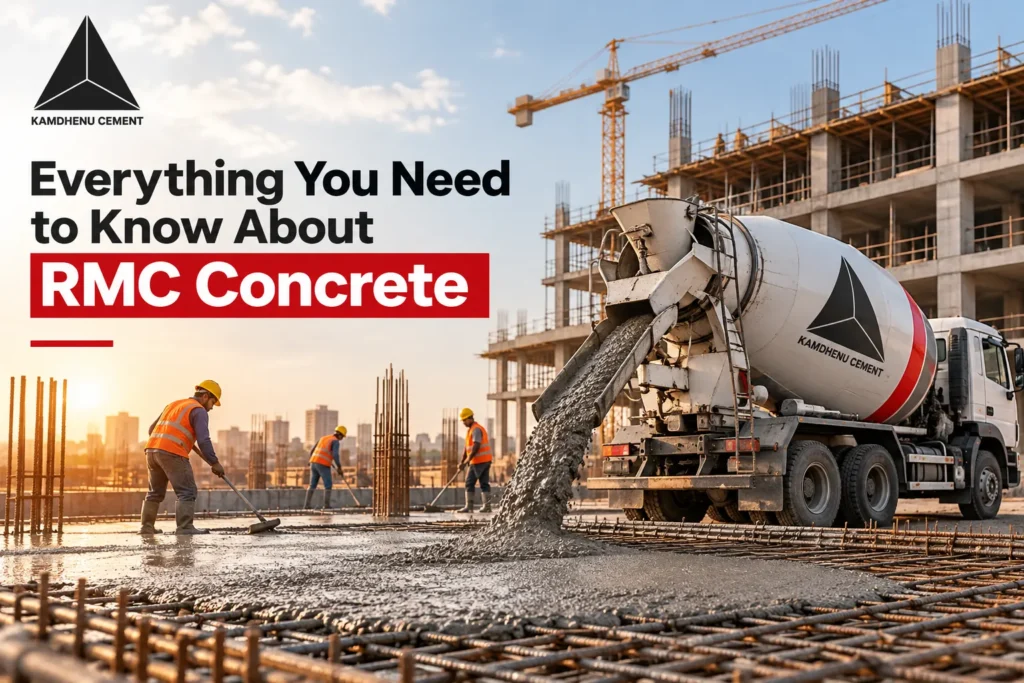
Ready-Mix Concrete, or RMC, is concrete that is mixed in a batching plant according to a fixed recipe and then delivered to your site. The mix usually includes cement, water and aggregates such as sand, gravel or crushed stone, and sometimes admixtures to control setting time or workability.
Once mixed, the concrete is carried to the site in a transit mixer, the truck with the rotating drum you often see on roads. The drum keeps turning on the way so the concrete stays fresh and ready to pour the moment it arrives.
RMC Grades and Where to Use Them
RMC is ordered by grade. The number after “M” shows the compressive strength in N/mm² the concrete reaches after 28 days of curing.
| Grade | Common Use |
|---|---|
| M10 – M15 | PCC, levelling course, flooring base |
| M20 | Residential slabs, beams and columns (minimum grade for RCC as per IS 456) |
| M25 – M30 | Multi-storey buildings and commercial projects |
| M35 and above | Bridges, heavy industrial floors and high-rise structures |
Your structural engineer will specify the right grade for your project. Don’t lower it just to save a little on cost.
The Advantages of RMC Concrete
- Consistent Quality: Every batch is produced to exact specifications in a controlled plant, so there’s far less variation in strength and durability. Each batch also goes through quality checks before it leaves the plant.
- Time-Efficient: There’s no mixing at the site. Work can start as soon as the transit mixer arrives, and large pours that would take a full day by hand can be finished in a few hours.
- Reduced Waste: Site mixing usually leads to spilled cement, leftover sand and over-ordering. With RMC, you order the quantity you need, which keeps wastage low.
- Cost-Effective: RMC may cost a little more upfront, but the savings on labour, time and wastage usually balance it out over the project.
- Better Workability: The mix can be customised for your project, which makes placing and compacting the concrete easier and gives a more even finish.
- Strength and Durability: Because the mix is accurate every time, the concrete reaches its designed strength, which helps structures last longer.
RMC vs Site-Mixed Concrete
| Factor | RMC | Site-Mixed Concrete |
|---|---|---|
| Quality | Consistent, machine-batched | Depends on labour and supervision |
| Speed | Large volumes poured in hours | Slow for big pours |
| Wastage | Low | Higher |
| Site space | No need to store sand and aggregate | Needs space for raw materials |
| Best for | Slabs, foundations, medium to large projects | Very small jobs and repairs |
That said, RMC isn’t always the right fit. For a small repair job, site mixing can work out cheaper, and the transit mixer needs a road wide enough to reach your site.
The Role of a Trusted RMC Supplier
When you choose RMC, the supplier matters as much as the concrete. Here’s why:
- Quality Assurance: A reliable RMC supplier like Kamdhenu Cement makes sure every batch meets the required quality standards. This is essential for the safety and strength of your structure.
- Timely Delivery: Speed is one of the biggest reasons to use RMC. A dependable supplier delivers on schedule, because a late truck can hold up your entire pour.
- Customisation: Every project is different. A good supplier offers mixes for your specific need, whether that’s high-strength concrete for a tall building or a more workable mix for detailed designs.
- Technical Support: A trusted supplier can guide you on mix design, pouring and curing, so you have someone to call when questions come up.
- Transparent Pricing: Clear pricing per cubic metre helps you understand the cost upfront and plan your budget without surprises.
What to Check When RMC Arrives at Your Site
A few quick checks at the site can save you from serious problems later:
- Delivery challan: Make sure the grade and batching time match your order.
- Time since batching: Concrete should be placed quickly, generally within 90 minutes to 2 hours of batching, depending on admixtures and weather.
- Slump test: This simple on-site test shows whether the concrete has the right workability.
- Cube samples: Ask for cubes to be cast and tested at 7 and 28 days to confirm the strength.
- No extra water: Never let workers add water to make the concrete flow easier. It reduces strength.
Common Applications of RMC Concrete
- Residential Construction: RMC is widely used in homes for foundations, slabs, driveways and pathways because it gives consistent strength every time.
- Commercial Construction: For office buildings, shopping malls and warehouses, where deadlines are tight, RMC keeps the work moving.
- Infrastructure Projects: Bridges, roads and dams need concrete that lasts for decades. RMC delivers the strength and durability these structures demand.
- Industrial Construction: Factories and industrial floors carry heavy loads and face harsh conditions, which makes RMC a practical choice.
- Architectural Designs: Its workability and consistency help architects create detailed and unique designs without compromising on structural strength.
The Sustainability Aspect
The construction industry is paying more attention to sustainability, and Kamdhenu’s RMC concrete supports this in several ways:
- Reduced Waste: Precise batching means less leftover material at the site.
- Energy Efficiency: Our RMC plants use modern equipment designed to reduce energy use during production.
- Lower Environmental Impact: Centralised batching uses materials more precisely and cuts down on wastage at site, which helps reduce the overall environmental impact of a project.
- Longevity: Strong, durable concrete means structures last longer, reducing the need for repairs and rebuilding.
Conclusion
Ready-Mix Concrete has changed the way India builds. Consistent quality, faster work, less wastage and better durability make it the preferred choice for most construction projects today, from a family home to a highway bridge.
But RMC is only as good as the supplier behind it. Choose one that delivers the right grade, arrives on time and supports you with technical guidance when you need it.
Kamdhenu Cement is a trusted RMC supplier committed to quality at every step. With Kamdhenu RMC, you’re not just saving time and money. You’re building structures that stand strong for years to come.
FAQs
1. What is RMC concrete?
RMC (Ready-Mix Concrete) is concrete that is mixed in a batching plant and delivered to the construction site in a transit mixer, ready to use.
2. What is the full form of RMC?
RMC stands for Ready-Mix Concrete.
3. Which RMC grade is best for house construction?
M20 is the minimum grade used for RCC work like slabs, beams and columns in houses. M25 is often used for multi-storey homes.
4. Is RMC better than site-mixed concrete?
Yes, for most projects. RMC gives consistent quality, faster work and less wastage, while site mixing suits only very small jobs.
5. How is RMC price calculated?
RMC is priced per cubic metre. The rate depends on the grade, admixtures, quantity ordered and distance from the plant.
6. How much RMC do I need for a slab?
Multiply length × width × thickness (in metres) to get cubic metres. For example, a 1,000 sq ft slab with 5-inch thickness needs about 12 cubic metres, plus around 5% extra for wastage.
7. How long can RMC be used after mixing?
RMC should generally be placed within 90 minutes to 2 hours of batching. After that, it starts setting and loses workability.
8. How do I check RMC quality at site?
Check the delivery challan, do a slump test on arrival, and get cube samples tested at 7 and 28 days.
9. Can water be added to RMC at site?
No. Adding extra water reduces the strength of concrete. If workability is an issue, ask the supplier to adjust the mix.
10. Which IS code applies to RMC in India?
IS 4926 is the Indian Standard code of practice for Ready-Mixed Concrete.