
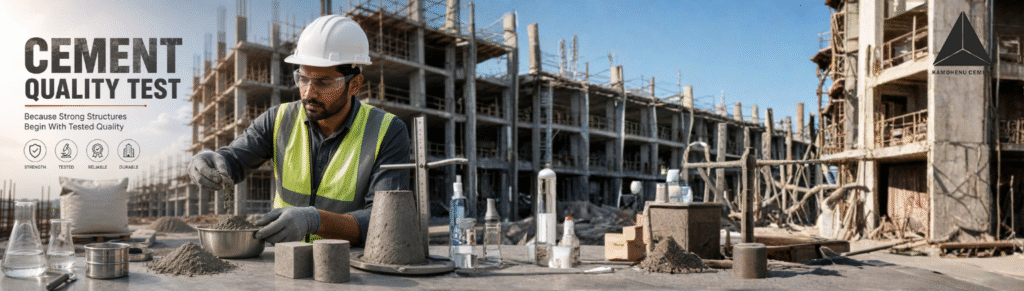
A building looks solid until the foundation turns to dust. Concrete holds secrets; it appears to be a basic grey powder, but it decides the actual lifespan of your walls. Purchasing it without an inspection is a massive gamble. You do not need a fancy laboratory coat to discover if your supplier is handing over stale stock. An easy cement quality test guards your wallet long before the foundation sets. People treat unopened sacks like magic capsules, ignoring that moisture sneaks into storage depots over time. Running a quick quality test right at the yard tells you if the contents will hold up or dissolve when the rain strikes.
Why Cement Quality Matters The Most
Fresh concrete mix acts like a temperamental culinary recipe. If the core ingredient is off, the whole structure suffers. The clinker composition dictates how well the mixture holds together over decades. Low-grade options look identical to top-tier stuff, but they introduce hidden weaknesses into your pillars.
Over time, poor moisture absorption characteristics lead to premature decay. The final compressive strength depends heavily on how the powder interacts during the hydration process. When cheap or degraded alternatives enter the mixer, the internal network weakens, creating tiny pathways for water to seep through. This permeability invites steel corrosion inside your pillars, compromising the structural integrity of the entire home.
A building that should stand for a century might start showing dangerous shrinkage cracks in less than five winters. Fixing these foundational issues down the line demands astronomical expenses, turning your affordable construction project into a financial nightmare. Quality control is not about checking boxes; it determines whether your roof stays above your head or comes crashing down.
How to Check Cement Freshness Before Making a Purchase
Buying old stock is the easiest way to throw money into the gutter. Here is how to check cement freshness without relying on the word of a salesman.
Verify the Manufacturing Date
As soon as production finishes, the clock starts ticking against the material. Learning how to check cement freshness requires a keen look at the outer stamping. When a sack stays on a shelf past 90 days, its load-bearing capability drops by 1/5th. Check the exact week of creation stamped on the seam to master this procedure safely.
Inspect Storage Conditions at the Dealer’s Warehouse
Moisture is the ultimate enemy. High storage humidity turns the powder into useless rock before it ever touches your mixing board. Walk around the supplier’s facility. Are the bags resting directly on damp dirt floors? Are they stacked twenty layers high, crushing the lower units? Safe storage means wooden platforms and proper clearance from wet brick walls.
Check the Packaging and Batch Details
Look for stitched ends that seem tampered with. Shady distributors sometimes re-bag old stock to trick unsuspecting project managers. Check for the compliance marks indicating it follows local IS standards. Knowing how to check cement freshness before signing the receipt keeps you far ahead of dishonest vendors.
Signs of Good Quality Cement You Should Know to Read
Your eyes and hands can spot fraud faster than you think. Learn the physical signs of good quality cement before making your final selection.
Uniform Grey-Green Color
Good cement maintains a distinct greenish-grey tint. If it looks pale, yellowish, or resembles backyard dirt, the chemical balance is wrong.
Fine and Smooth Texture
Rub a pinch between your fingers. It should feel smooth like flour. Particle size determines how well the paste wraps around sand grains. Coarse grains mean the manufacturer added cheap fillers or failed to mill the raw stones down. Recognizing these distinct signs of good quality cement protects your project from day one.
Cool Temperature Inside the Bag
Thrust your bare hand into the sack. It should feel pleasantly cool. If it feels warm, a premature hydration process is already happening inside due to moisture contact, releasing hydration heat ahead of time.
Minimal Lump Formation
Hard chunks mean the material has started absorbing air moisture, ruining its aggregate bonding capabilities. Spotting the true signs of good quality cement requires looking past the clean packaging and examining the actual contents.
Cement Quality Test at Home: Practical Checks You Can Perform
If you want absolute peace of mind, running a cement quality test at home provides undeniable proof. You do not need expensive gear to run these simple assessments in your backyard.
Hand Insertion Test
Plunge your arm into the middle of the bag. A healthy batch welcomes your hand with a cool, silky sensation, showing zero resistance from hidden hard blocks.
Water Float Test
Take a handful of cement powder and throw it right into a bucket of clean water. Good powder floats for a brief moment before slowly finding its way to the bottom. If it plunges down like a stone immediately, it suggests heavy impurities.
Thumb Impression Test
Take a thick lump of paste made from the sample and press your thumb into it. The mark should remain sharp without the paste cracking or splitting apart instantly, which signals poor plasticity.
Cement Pat Test
Fuse a small cake of cement with water, place it on a glass plate, and submerge it for a whole night. It should harden without changing its shape or developing any surface fractures, confirming excellent soundness.
Simple Construction Site Observations Professionals Still Rely On
Experienced contractors read concrete like an open book. They watch the setting time closely during the initial pour. If the mix stiffens too quickly, the hydration heat is climbing abnormally fast, which ruins the curing performance.
Pay attention to the water-cement ratio required to make a workable paste. A sudden surge in water demand means the powder is stale or contaminated. Watch the surface finish consistency as it dries. High-quality mixtures settle smoothly without bleeding excess water to the top. If tiny lines appear within hours, those early shrinkage cracks reveal poor bulk density or incorrect blending at the factory.
Cement Quality Checklist Construction Professionals Commonly Follow
Smart builders never leave their material choices to luck. Utilizing a standardized cement quality checklist construction guide keeps site supervisors honest and prevents catastrophic building failures. Let us look at the standard parameters experts track before authorizing a large pour.
| Parameter | Ideal Target | Danger Sign |
| Manufacturing Date | Under 30 days old | Over 90 days old |
| Storage Environment | Elevated wooden pallets | Direct floor contact, wet walls |
| Color | Uniform greenish-grey | Yellowish or earthy brown |
| Texture | Smooth and flour-like | Gritty and abrasive |
| Lumps | Zero lumps present | Hard stone-like chunks |
| Temperature | Cool to the touch | Warm or hot internal temperature |
By implementing this cement quality checklist construction protocol, you eliminate human error from your procurement workflow.
Common Mistakes Buyers Make While Evaluating Cement
Many people fall into the trap of hunting for clearance sales. Buying discounted old stock is the fastest way to compromise structural integrity. Another massive error is assuming a big brand name guarantees fresh product. Even top-tier manufacturers do suffer when local dealers store bags carelessly. Skipping field inspections because you trust the delivery truck driver is an invitation for trouble. Always check the physical state of the cargo before unloading it onto your property.
Why Consider Laboratory Testing?
While field checks work wonders for small residential builds, large commercial projects require absolute scientific precision. This is when a formal cement quality test inside a certified facility becomes mandatory. Technicians measure exact compressive strength parameters using heavy hydraulic presses. They run rigorous soundness and fineness assessments to verify compliance with national regulations. If you are handling bulk procurement for multi-story structures, relying solely on touch and sight is a gamble you cannot afford.
Conclusion: Buying Better Cement Starts With Better Inspection Habits
Your building deserves a foundation that braves the elements for generations. Performing a regular cement quality test ensures you receive the exact performance you paid for. Kamdhenu Cement understands the urgent need for perfection. By adhering to intricate manufacturing standards, they deliver consistent, fresh material directly to your site, removing the guesswork from construction quality control.