
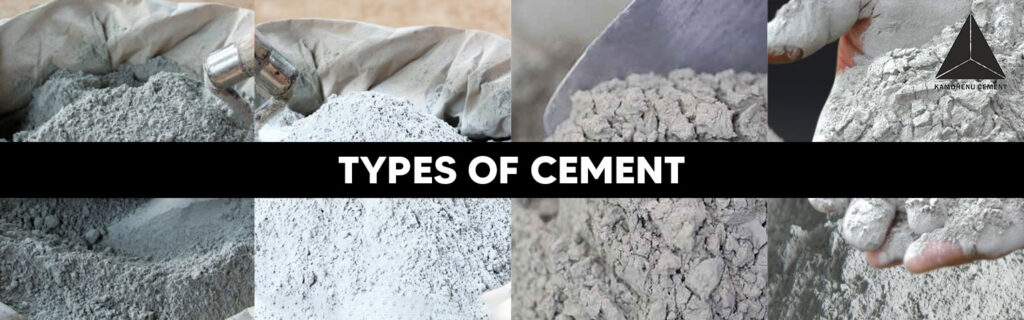
Walk into any building materials store in India and you’ll find multiple bags of cement stacked side by side, most looking identical. The brand might be different but the bigger question — which types of cement actually suits your project — rarely gets the attention it deserves. Getting this wrong doesn’t show up on day one. It shows up three years later in cracks, poor bonding, or structural degradation.
The cement varieties available in India today cover a wide range of applications — from standard house construction to marine environments, industrial floors, and decorative finishes. Understanding these cement types, their grades, and cement composition is the foundation of a good buying decision.
Kamdhenu Cement manufactures OPC and PPC cement for residential and commercial projects, with a focus on consistent quality and competitive pricing across northern and central India. This guide covers the main cement varieties used in construction so you know exactly what to ask for.
Why Choosing the Right Cement Matters
Cement is the binding agent in almost every construction activity. Each cement type varies based on environment, structural requirement, and expected service conditions. The wrong type — even from a good manufacturer — can result in premature cracking, reduced load capacity, poor surface finish, or failure under specific environmental conditions.
Cement selected for a coastal build needs to handle moisture and chloride differently than cement used in building construction for a dry interior floor. What works for mass concrete in a dam would be inappropriate for fast-track residential work. These are not minor differences. They’re the reason so many cement types exist in the first place.
Types of Cement and Where Each Is Used
Ordinary Portland Cement (OPC)
The most widely used construction cement in India. OPC is available in 43 grade and 53 grade — the number indicating compressive strength in MPa at 28 days. OPC 43 is used for general plastering and masonry; OPC 53 for structural RCC work where faster strength gain matters. As the best OPC cement in India for structural applications, it’s the default specification for most engineers working on residential builds.
Portland Pozzolana Cement (PPC)
PPC blends OPC clinker with fly ash, providing slower strength gain but better long-term durability, reduced heat of hydration, and improved resistance to chemical attack. It’s the preferred choice for most general residential construction — walls, plastering, and non-critical RCC work. PPC cement is also more eco-conscious due to lower clinker content.
Rapid Hardening Cement
Designed to reach full strength faster than OPC — typically within 24 hours rather than 28 days. Used in precast concrete elements, road repairs, and projects where forms need to be removed quickly and construction can’t wait for the standard curing period. More expensive and not suitable for mass concrete work.
Sulphate Resistant Cement
Specified for foundations, basements, retaining walls, and any structure in contact with sulphate-bearing soils or water. Regular Portland cement reacts with sulphates and deteriorates over time. Sulphate resistant cement contains lower C3A content, making it chemically stable in these environments.
White Cement
Manufactured from raw materials with very low iron and manganese content, giving it its white colour. White cement is not used for structural work — it’s for decorative finishes, tile grouting, architectural detail, and surface work where colour matters. Costs significantly more per bag than grey cement due to the controlled manufacturing process.
Low Heat Cement
It is used in mass concrete construction such as in dams, large retaining walls, and raft foundations because of the heat produced during hydration that can result in thermal cracking of the material. This type of cement contains low quantities of C3A and C3S, allowing gradual release of heat during the curing process. It is not a commonly used cement for home use.
Blast Furnace Slag Cement
Produced from the mixing of OPC clinker and granulated blast furnace slag, which is a by-product of the production of steel. It provides good durability, sulphate resistance, and low heat of hydration, hence is widely used in marine constructions, underground construction, and where there is a need for sulphate resistant hydraulic cement.
Hydrophobic Cement
A special purpose cement obtained through the grinding of OPC clinker with oleic acid or other water-resistant agents to form a hydrophobic layer which prevents the cement from absorbing moisture while being stored. Once mixed with water, it behaves like standard OPC.
Cement Grades Explained
Cement grades in India are defined under BIS standards by their 28-day compressive strength.
33 Grade — older standard, largely phased out for structural work. Still used in some finishing applications.
43 Grade — the standard workhorse. Used in plastering, masonry, and non-structural concrete. Widely available and competitively priced.
53 Grade — higher early strength. Specified for RCC beams, columns, slabs, and foundations. The correct choice when the engineer’s drawing specifies M25 concrete and above.
The cement grades (43 & 53 Grade) distinction matters practically because using 43 grade where 53 is specified under-delivers on the intended design strength — and the error isn’t visible until the structure is under load.
Types of Cement vs Applications (Quick Comparison Table)
| Cement Type | Key Cement Applications | Grade/Standard |
| OPC 43 | Plastering, masonry, general concrete | IS 8112 |
| OPC 53 | RCC structural work, high-strength concrete | IS 12269 |
| PPC | General construction, finishing | IS 1489 |
| Rapid Hardening | Precast, road repair | IS 8041 |
| Sulphate Resistant | Foundations in sulphate soil | IS 12330 |
| White Cement | Decorative, grouting | IS 8042 |
| Low Heat Cement | Dams, mass concrete | IS 12600 |
| Blast Furnace Slag | Marine, underground structures | IS 455 |
Key Properties of Cement
Understanding cement properties before buying helps you match product to application.
Fineness — finer grinding increases surface area and improves strength development. IS standards specify minimum fineness values for each type.
Setting time — initial set (when the mix stops being workable) and final set (when it hardens). Important for planning pour schedules and form removal.
Soundness — the cement’s ability to retain volume after setting. Expansion after hardening causes cracking. Tested using the Le Chatelier apparatus.
Compressive strength — measured at 3, 7, and 28 days. The 28-day value defines the grade.
Heat of hydration — the heat released during the chemical reaction between cement and water. High in OPC, low in PPC and low heat variants.
Practical Tips for Buyers
Match cement type to the application. The types of cement used in construction differ significantly by application. For cement for house construction in India, PPC handles the bulk of the work — walls, plaster, non-structural slabs. OPC 53 for columns, beams, and any element where the structural drawing specifies a concrete grade above M20.
Verify the grade stamp on every bag. Mixing 43 and 53 grade bags mid-project creates inconsistency in concrete strength across batches.
Check ISI certification. Every legitimate bag of construction cement in India should carry a BIS mark. Uncertified cement has no verified quality standard behind it.
Buy from a verified cement manufacturer. Consistent cement manufacturing standards and traceable production, published test data, and an established dealer network gives you recourse if quality issues arise. Kamdhenu Cement supplies OPC and PPC grades with consistent quality across northern and central India — a reliable option for residential and mid-scale commercial projects where the best cement for construction at a competitive price matters.
Store correctly. Cement absorbs moisture from the air. Keep bags off the floor on pallets, away from walls, and use within 90 days of manufacture for optimal performance.
Conclusion
The types of cement used in construction in India range from everyday OPC and PPC to specialist products for extreme environments. Most residential projects use only two, but knowing the full range helps when the project demands something different. Most residential projects need only two: PPC for general work and OPC 53 for structural elements. The broader list becomes relevant when your project has specific environmental or structural demands.
Understanding the types of cement in India before you buy means you’re choosing based on the actual requirements of your structure — not just whatever’s on sale. For verified OPC and PPC cement at competitive pricing, visit kamdhenucement.com or contact your nearest Kamdhenu dealer.
PPC is commonly used for general construction, while OPC 53 grade is preferred for structural elements like columns, beams, and slabs. OPC gains strength faster, whereas PPC offers better long-term durability, lower heat generation, and improved resistance to moisture and chemicals. OPC 53 grade is generally recommended for RCC structures because of its higher compressive strength and faster strength development. Look for the BIS/ISI mark, check the manufacturing date, ensure there are no lumps in the bag, and buy from a trusted brand or dealer. Yes. Many projects use PPC for masonry and plastering while using OPC 53 grade for structural concrete work. Which type of cement is best for house construction in India?
What is the difference between OPC and PPC cement?
Which cement grade should I use for RCC work?
How can I check if cement is of good quality?
Can different types of cement be used in the same construction project?